Email, weather and news are the kind of categories where most marketers let the product decide the tone, so they play it sensible and stay invisible. Yahoo went the other way with a keyboard made of grass, mints to remind you to attach the attachment and a horror film about hitting reply all. Kemma Kefalas, Head of Creative Lab at Yahoo, shares where the ideas start, how they get signed off and what it takes to keep them coming.
Hey Kemma, for anyone crazy enough not to already know… who are you and what do you do?
I'm Kemma Kefalas, Head of Yahoo's Creative Lab, a team focused on bringing Yahoo back into the cultural conversation through brand social, creators, and social activations.
In this role I oversee Yahoo brand social channels, creator and influencer partnerships, and the social-first brand activations that connect Yahoo's properties, including Yahoo Scout, Yahoo News, Yahoo Mail, Yahoo Finance, Yahoo Sports and more, under one voice.
Email, weather, news, not exactly a fun list is it… what do you see when you look at it?
I'd argue these can be a lot of fun! These properties are part of our daily routines and habits. People have strong personal connections to them, which makes for a lot of fun on social.
For example: the weather impacts your daily activities, what we wear, whether we have a great weekend or a not-so-great one. Email is one of our main forms of communication and a means by which we keep in touch with people and stay organized.
And news is of course how we stay connected and informed to the world around us. These little pieces of our lives might feel innocuous, but they are deeply ingrained in our daily habits and can have a major impact on how we move through the world. I think the tension point of 'small but big' is really rich territory as a marketer.
None of your campaigns started with a product feature. Attach-mints, the touch grass keyboard (one of my favourites) and Reply All all started with something small and annoying, so is that where you always begin? And how do you know when an idea's got potential to "make it"?
We have a philosophy that the insights that inspire our products should also inspire our marketing. For example, when it came time to launch the new Yahoo Weather this summer, they set out to make checking the forecast more useful and more enjoyable with smarter forecasts, enhanced radar and deeper weather insights. We leaned into making Weather fun again, and at the same time noticed a rise in Creator-led weather content and updates. Altogether, this led us to Kyle Cooke becoming our official Yahoo Weather 'Weatherboy'.
We're not always pushing our products on social though. Sometimes it's a more subtle connection to how people connect with Yahoo, or technology in general.
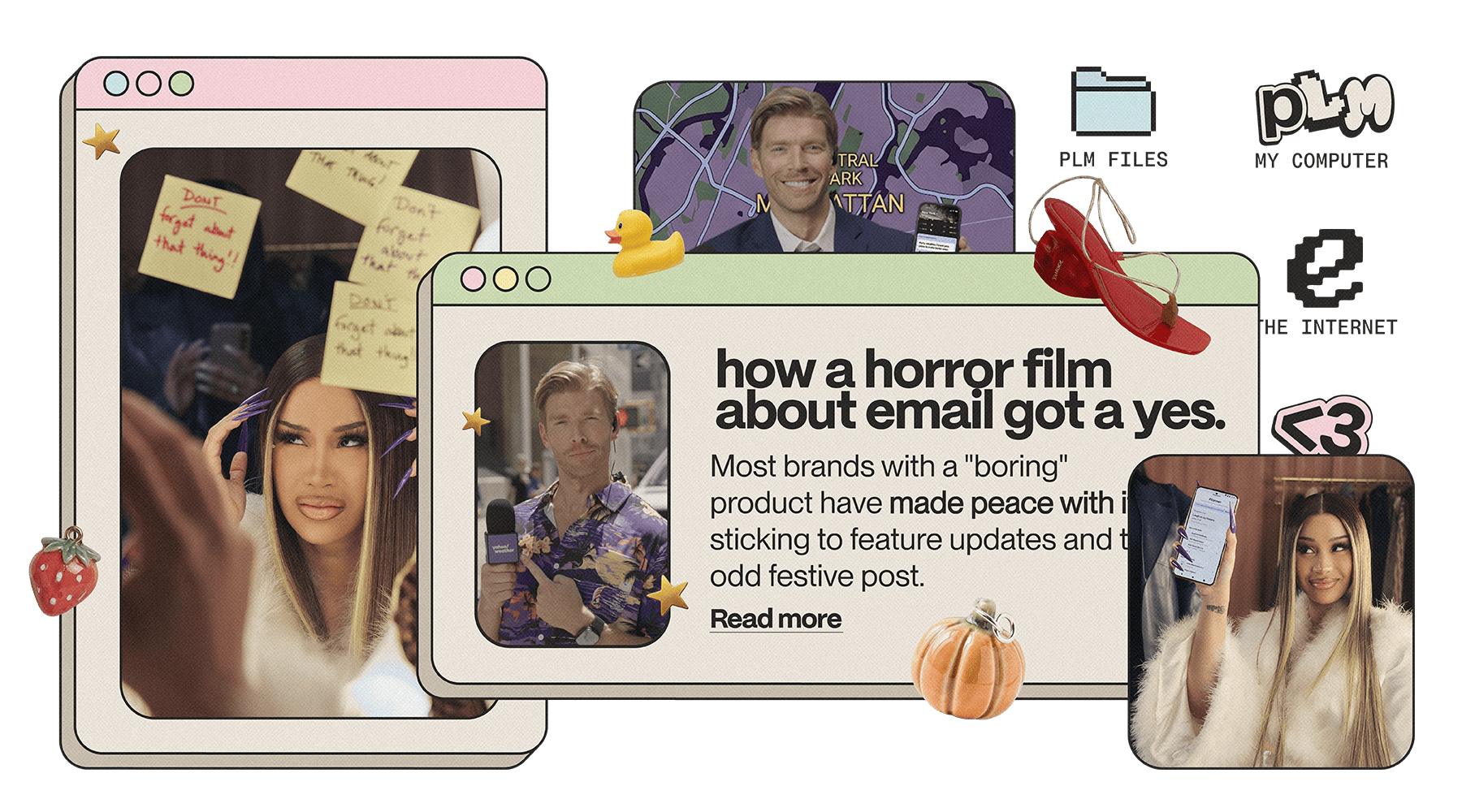
Like you mentioned, we're constantly creating content inspired by universal technology pain points. For example, when we launched the new Planner feature in Yahoo Mail, we tapped into the universal feeling of inbox anxiety and gave it a name, FOMSI, the Fear of Missing Something Important, and cast Cardi B to show how she uses Planner to stay organized and on top of what's important.
We've found a fun way to create a physical element to an otherwise intangible brand through a series of 'techsessories', a ridiculous array of inventions to make people chuckle. Because we all need attachMINTS to remind us to actually attach the attachment…right?!
A funny idea is a harder sell than a performance one, so how do you show it worked, and what are you looking at beyond the obvious numbers?
Our team's mission is to consistently inject Yahoo back into cultural conversation. We're extremely fortunate to work for leaders who just 'get it.' They understand humor, culture, and that you have to take big swings to get big returns, both on the brand and performance side. We know we're on the right track when our internal teams are laughing at the early cuts before we release them!
I would love to know how a Halloween horror film about email gets signed off. Where does that conversation go, and what do you say to the person who wants something safer?
"The Horrors of Reply All" came from an 'always on' social brainstorm around Halloween. It led us down the path of, "What's a universally 'scary' moment in tech?" and snowballed from there. To us, this topic didn't feel "unsafe"! The human truth is present, the feeling of accidentally replying all to something you shouldn't have is so real. We're fortunate to have leaders who completely get it and were excited about the concept from the get-go!
Has an idea or campaign ever just not landed, and what did you do with it after?
For sure. Some campaigns do better than others for all kinds of reasons, maybe the insight was stronger, or the talent was more engaging. One of my favorite things our CMO, Josh Line, always says is "shots on goal."
We're constantly taking shots, knowing some will outperform others, and that's just the nature of it. We're in a rebuilding phase that requires real momentum, and my team's campaigns are one part of that. So we keep on keepin' on, because there's always another shot to take!
You were at Dunkin' for seven years and everyone already loved that brand, so what's different about walking into one where you have to earn the attention back?
It feels like so long ago, but we really did have an attention renaissance as a brand at Dunkin' too. Back in 2018, we made the big bet to drop 'Donuts' from the brand name. Our entire ethos shifted following that, and the beginning days of TikTok really cemented us as a leader in culture. That said, it's absolutely a different creative challenge and opportunity within Yahoo. We've focused on creating content that leans into our already-beloved, deeply irreverent brand voice.
By bringing humour to daily moments we experience through tech, we are straddling such a fun line of comedy and truth. Having an 'intangible' brand vs. the ability to hold a coffee in the air and snap a quick photo has been such a fun challenge. We really have to work harder and extremely strategically to unearth cultural insights that will make people care and ultimately, hit the share button. It's a challenge I've loved for the last 2 years, and we're really keeping the foot on the gas.
And finally, if someone's working on a brand or product they think is too dull to play with, what's the first thing you'd tell them to do?
First, I'd ask, "What are the insights!!" Then I'd suggest becoming really good friends with the product marketing teams. They're a wealth of information on how consumers are using the product and how they WISH the product worked better.
There are surely industries that don't have as much permission to infuse humour and play, but brands and products have rich insights waiting to be discovered. You've got to open up the aperture and think a bit outside the box.
A huge thank you to Kemma and the Yahoo Creative Lab team for being so generous with the behind the scenes, and for proving that no product is too boring to have fun with.
Join the list
We save our biggest ideas for the inbox. Entered the chat and Deep dive go deeper than we ever do on the grid, sign up to get them first.
Sign up to receive updates and marketing emails from us. You can unsubscribe at any time.