the deep dive on creative-control
Welcome to Deep Dive! This is a new monthly series and I really hope you love it, because where the Round Up gives you everything happening that week, this takes one thing and goes all the way in on it, so you get the why it matters instead of the here's what happened.
This Deep Dive is produced in partnership with Meta! This month I had the chance to review a shortlist of the UK's standout Partnership Ads and pick a winner for their Partnership Ads Spotlight.
The problem, and what Partnership Ads do about it.
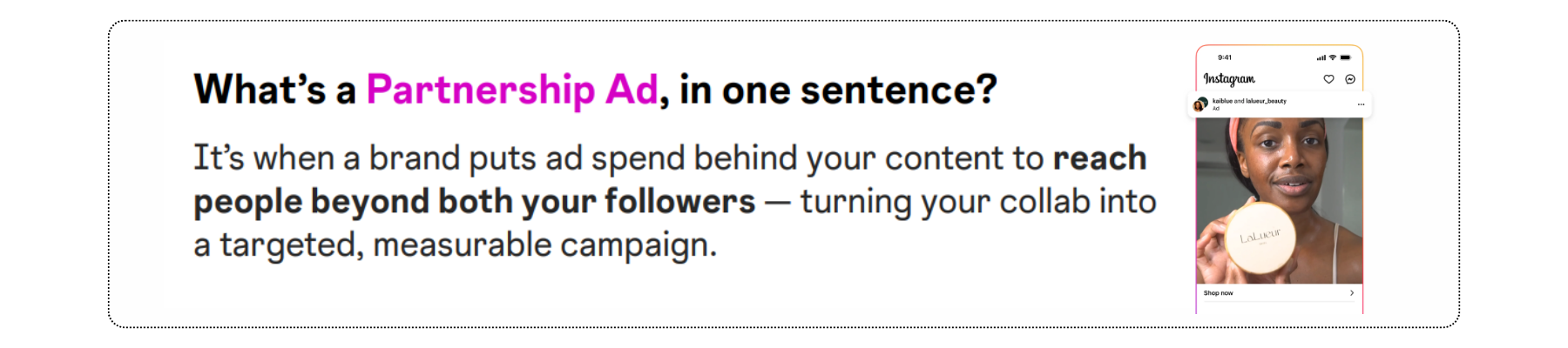
People have got good at tuning out anything that looks like a brand talking at them, which is why creator content now makes up 44% of brands' paid media creative on average, and why 77% of paid media marketers say it beats traditional ad creative. The trouble is what happens after you've booked it, because every note that comes back sands off a bit more of what made it worth watching, and you end up paying creator rates for a brand ad.
Partnership Ads close that gap. The brand and creator make the content together, it lives on the creator's handle in their voice with a paid partnership label, and it runs across Instagram and Facebook with the same targeting as any other campaign. Meta report 19% lower CPAs and 13% higher click through rates than traditional brand ads.
This month's winner.
Meta sent over a shortlist of the UK's standout Partnership Ads from the past month, a mix of brands, categories and creators, and the one I picked was Morfo Peyiazis with Budweiser UK at Parklife. She spends the day at the festival interviewing people, asking things like what northerners bring that southerners don't, moving between the different stages and crowds and making friends as she goes
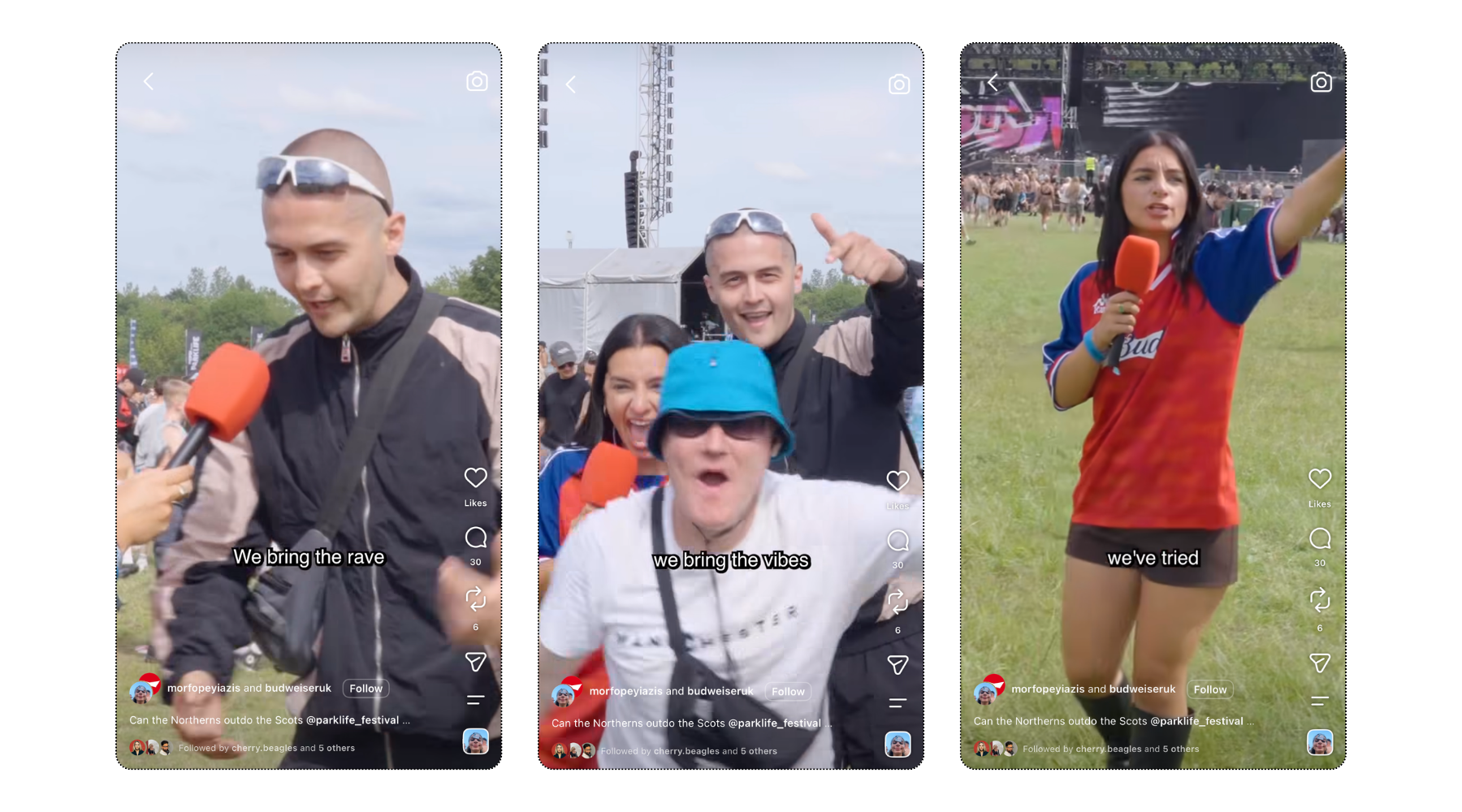
The stand out thing about this ad is that Budweiser isn't selling you anything in it. There's no pint held up to camera, nobody says a word about the beer, and the brand's entire role is being the reason a load of strangers ended up in conversation with each other. They've earned the right to play that role, because Budweiser are the lead beer across Live Nation's UK festivals, so being part of the day out isn't a stretch, it's just true. That's a much better thing to own than a product claim, because a claim gets argued with and a good day doesn't, and the association it builds is the one that actually gets you picked at the bar six months later.
Then there's the question itself, because what northerners bring that southerners don't isn't a question you can answer without taking a side, so it works twice over, once on the people at the festival who light up and start performing rather than mumbling, and again on everyone watching at home who's got their own answer and wants to say it. Most branded content asks people to watch. This asks them to weigh in, which is why it earns the sort of engagement you'd otherwise have to pay for.
And nowhere in it does the content stop and the ad start. There's no pivot, no line dropped in for the brand, no shift in how she's talking, so there's no cue telling anyone to scroll. It's creator authenticity, with brand scale, and that's what makes Partnership Ads work.
Running it as a Partnership Ad means Budweiser and Morfo collaborated on this content together, and Budweiser then promoted it as a paid ad through Morfo's handle, reaching audiences way beyond her organic following.
What Budweiser got right that most brands get wrong.
They let the creator work the way the creator works, which is not only completely brand new and revolutionary (I say, sarcastically) but actually backed by real research. Studies have found that loose briefs generate roughly double the clicks compared with more prescriptive ones, and that fewer creators want to take part when a brief is tightly controlled.
Most of you aren't writing briefs that are prescriptive on purpose though. The initial brief tends to start quite reasonably, and control arrives later in the feedback, one note at a time, because the content gets held against the brief, so every difference from what was asked reads as something to fix, including the differences that were going to make it work.
Here's how you're going to fix that:
Add a second question to your review, along the lines of would this stop me scrolling if I didn't work here, so feedback has to justify itself against performance rather than the brief.
Mark every line of the brief as compliance or preference. Disclosures, claims and commerce mechanics are compliance. Hook, pacing and tone are preference, and the preferences are the expensive bit.
That's the first Deep Dive! Thanks to Meta for making it happen, and if there's a shift you want pulling apart next month, hit reply and let us know.

Sophie x
Join the list
Sign up to receive updates and marketing emails from us. You can unsubscribe at any time.